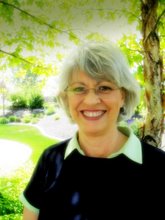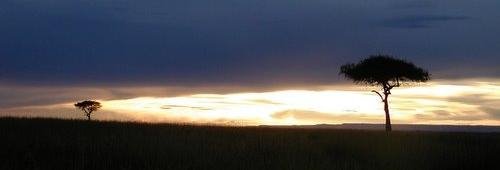
Welcome to our Blog! What are the goals of "Africonnection"? To further the Kingdom. To help North American friends make a connection with the lives and experiences of their brothers and sisters in Africa. And to give North American friends an opportunity to partner with Africa Nazarene University as it supports the Kingdom through the Church of the Nazarene in Africa.

Mark and Nancy

Monday, February 11, 2008

Diaries and Busy Days

We both keep journals. In fact, one of the things we did while we were dating was to exchange several years of our personal diaries. It was a little scarey, but since the diaries were our personal, sometimes happy and sometimes unhappy thoughts, it was a very good way to get to know each other very well very quickly.

The trouble with diaries is explained by the Irish poet William Allingham:
"A man who keeps a diary pays
Due toll to many tedious days;
But when life becomes eventful--then,
His busy hand forgets the pen..."

Life has been eventful and rich, and that's part of the reason we haven't written in awhile. We'd like to share some pieces of our work and lives with you...

Some prayer pieces:
Things are going well for us. We are sleeping well and getting exercise walking on campus and up the four flights of stairs to offices and meetings. We would ask for prayers for other people and things:
  • Remember Kenya. The peace talks with Kofi Annan appear to be bringing the two sides together, but the bitterness and tribal conflict that have occurred will not go away without intentional tribal and even interpersonal peacemaking. People must participate, but it will take God's healing spirit to bring about real change.
  • Remember Eugenio Duarte, our wonderful Africa Region Director; Professor Leah Marangu, the legendary leader of ANU; and Rev. Don Gardener, who is working mightily with pastors and congregations who have been disrupted and threatened by the disturbances.
  • Remember our students. Kenya's future and Africa's future genuinely depend on whether students like ours can sustain hope in an embattled continent, learn both job skills and leadership skills, and grow in their relationship to the Lord. That's easy to write down but very hard for them to do right now. Please pray for them.
Some people pieces:
We're meeting some wonderful young people, and since one of the purposes of the blog is to introduce to you African people, we'd like to share with you some of the young people we're getting to know and to ask you to pray for them as well:
  • We attended a one-day retreat for student leaders. Nancy spoke on "Celebrating Diversity " as an example of excellent leadership. The style of student leaders at the public universities is very confrontational, but Dennis, the student chairman this year, has a much more cooperative style. He already has a law degree from a public university but is working on a degree in Mass Communications at ANU.
  • Paul and Beatrice are a young married couple from Ghana. Paul is a Nazarene ministerial student (who has training in textile design on the side) and Beatrice is an accomplished seamstress. They live along the dirt road between ANU and the paved road and we often see them as we travel from campus to Nairobi. They have one more year at ANU before they return to Ghana and they begin their life as a pastoral couple.
  • Lillian and Lulu and Becky are three young women students we had to our house for dinner last Wednesday (more on that evening in a minute). Lillian and Lulu went to high school together. Lillian lives on the Ngong Road which has been the scene of so much unrest in Nairobi and her concerned father asked her not to come home until things settle down. Lulu is a singer and had parts in "Grease" and "Joseph and the Amazing Technicolor Dreamcoat" in her high school's musicals (isn't it fun to think what those productions might have looked like?). The girls are struggling to be hopeful about their future lives in Kenya.
  • Last week we went out to pizza with Jeanette and Bekka (an American student from Oregon and an American volunteer from Rochester, New York). Jeanette brought her best friend Yvonne, a young Kenyan student who is among the most impressive young women we have met--here or anywhere. She was reluctant to come with us but finally agreed. The American students did most of the talking at first but Yvonne eventually began telling her story: she is the youngest child of a single mother who has four children of her own and has cared for as many as 15 orphans in her home in Western Kenya. Right now the mother, three of her own children and 5 orphans are barricaded in their compound in Western Kenya. The mother is clearly a strong, caring woman for whom Yvonne is a source of intense pride. The family is eating food brought to them by kindly neighbors who can get out because they belong to the dominant tribe. Yvonne lives in a small room by herself in the town near the ANU campus. Her attitude in the midst of these family and personal challenges? Realistic about her family and financial challenges but quietly confident and hopeful. She wants to help other people once she graduates from ANU and has a kind of quiet strength and wisdom that will serve her and Africa well. We'd ask you also to be praying for Yvonne's family, life as a student,financial challenges and her future. She's our personal favorite so far.
Some events pieces:
  • Water and snake Wednesday--While Lillian and Lulu and Becky were having dinner with us, we heard a splashing sound from the other side of the house. When we went to investigate we discovered that because of the addition being built for the Jameses, our neighbors, a drain had been clogged and our washer backed up spilling an inch and a half of water on the floor in four rooms! The three girls who had dressed up to have dinner with us rolled up sleeves and pants legs, grabbed mops and towels and went to work with us. In a few minutes we had dumped seven buckets of water outside! When we bragged on the girls they said--"It's nothing. We work much harder than this at home!" Later that same evening as we were shutting out the lights, we saw the guard whose post is behind our house throwing rock after rock at the ground. Turns out his target was a "spitting cobra" that had been slithering across the car park behind our house. (The one behind our house was "only" about 3 1/2 feet long and not as scarey, at least in the dark, as the one pictured to the left. ) As the guard held it up on a stick for us to see, he told us that almost exactly a year earlier and in the same place, a similar spitting cobra had spit its toxic venom into his eyes, blinding him. He praised God that the blindness had only lasted for four days, and Verna Stanton, a missionary nurse, said he was very lucky the blindness wasn't permanent. This was the first snake we've been aware of, and the staff reassured us that they spray twice a year to keep the snakes to a minimum.
  • Furniture arrives! The University has been very thoughtful about putting a few, temporary pieces of furniture and appliances in our apartment while we look for permanent furniture that we like. We went to stores, to a furniture factory in a Catholic orphanage, and to some of the "sunshine stores"--little shops with piles of furniture out in the open along Ngong Road . Last week we got a bed and chest custom-made by a roadside shop and four "camp chairs" with canvas seats for the balcony. Today, much of the furniture arrives: five bookcases made by the estate staff of the University; a comfortable living room suite; three area rugs; and a stove, refrigerator and clothes dryer. It may be awhile until our four crates arrive from the US, but in the meantime we are glad to be getting some of our furnishings in place.
Thanks again for reading this blog and for responding so warmly and often. We have been so blessed by the number of you who say you are praying for us and many of you have honored us by sharing your OWN prayer requests with us. Right now we're praying for a friend facing severe health challenges in Idaho, for a couple we met in Kansas, for the work of a DS in the Northwest, for an older couple in Indiana and many others. We appreciate your prayers and we'd love to be praying for you. If you have a concern you'd like to share with us, we'd consider it a blessing if you let us know about it at mnnkenya@gmail.com so we could join you in prayer. In the meantime, blessings on you and we'll write again soon. Next time, unless something else intervenes, we'll write about what we're learning about God from the people and the Creation in Africa.

Tuesday, January 22, 2008

Living in Stereo

Several years ago, while we were chaperoning the NNU choir on a tour of England and Scotland, we spent an afternoon in Festival Hall on the South Bank of the Thames in London. We were drawn in by a really wonderful big band that was playing songs from the 40's and 50's. Instrumentalists and vocalists gave their full talent to the lively, happy songs and a large crowd had gathered. Sharing the hall with the band, however, was an exhibition of the prize-winning photographs of international journalists. While there were some happy photographs in the collection, many of the photographs were of tragedies--fires, earthquakes, victims of war or crime. It was hard for us to get our heads around the fact that the happy music and the sad photographs could exist in the same place.

Fast forward to Kenya today: it's human for us and for our friends to expect Kenya to be "all something." We see the news and think perhaps Kenya is all tragedy or danger. We live our daily lives here and begin to think Kenya is some version of normal. As GK Chesterton pointed out, the world God created is full of paradoxes: we are both the lowest of creatures and the children of a King; earth is both a temporary resting place for heavenly creatures and the place God created with his own hands as our home. Kenya is also a paradox.

Last night the Kenyan news (there are three national TV channels and multiple newspapers) interviewed several people who have been displaced because of the violence. Children in Kenya see education as the one great hope of improving their lives, and one bright junior-high aged boy cried to think his dream of being a doctor was being delayed or destroyed because he was far from his school and without funds for books or the required uniform. An elderly woman seemed fatalistic about ever getting home. We hear sporadic reports not just of battles between protesters and police, but between different tribal groups. Five people were killed with machetes in an isolated village. A heroic priest in Western Kenya invited minority families into his monastery and frantically phoned for police help as young toughs burned the families homes and tried to get into the monastery. (The police arrived in time.) Some of our students arrive with stories of violence in their home towns before they arrived on campus. Several students have arrived a week late and some will not be able to return this semester because of the unrest.

And yet, and yet--outside our windows in the afternoons and evenings we can hear the laughter of students catching up on their friendships after the extended time away. A young gardener named Samuel is creating a tiny Eden around our home as he builds stone walls and stairways, plants palms and flowers and grass. We began our "Holiness Week" emphasis on Monday with Rev. Chanshi Chanda, the director (called field strategy coordinator) of the French Equitorial Africa field. One of our faculty members just received a Fullbright Scholarship to serve as a visiting scholar in an American university. We are beginning the process of introducing distance learning to better serve Africa. Nancy and I saw cheetahs, pygmy hippos and a rhinoceros the size of a tank on the Safari Walk at Nairobi National Park and fed Betsy the giraffe at the Kenya Giraffe Center in the suburb of Karen on Sunday afternoon.

What are we learning, what are we being reminded of: We do not live our lives in monaural. We live them in stereo. There's enough good in any bad to give us hope. There's enough bad in any good to make it worth praying about. With the need for prayer in mind, we'd thank you again for your prayers for Kenya and for ANU and for us, but we would encourage you to continue praying:
  • For the talks between the opposing political parties which are to begin tomorrow, led by former UN Secretary General Kofi Annan;
  • For the physical protection of members of minority tribes in isolated areas of Kenya;
  • For ANU to continue to be a lighthouse and a model of Christian unity in Africa, and to be even more effective in training its students to be effective, godly leaders in a needy world;
  • For Nan and me that we might see and do what the Lord would direct us to do on behalf of the Kingdom in this part of the world.
Oh, by the way: the Student Council at ANU is raising money to help the 250,000 Kenyans who have been displaced by the regional violence. If you'd like to make a donation to that effort drop us a line at mnnkenya@gmail.com and we can tell you how.

Saturday, January 5, 2008

Faith in Action in Western Kenya

Many of you have been communicating that you are praying for us and for the situation in Kenya. We want to share a wonderful story that demonstrates the impact of your prayers and those of others in and out of Kenya.

Western Kenya has been a focus for some of the violence after the December elections in Kenya. A Nazarene District Superintendent in western Kenya, near Kisumu, felt led during his own prayers to approach a group of Luo men he knew were gathering to talk about the political situation.

When he went to them they said, "We have heard some Kikuyu are gathering to kill us and we are arming ourselves to meet them." The DS asked this group to stay put and went to the Kikuyu who said, "We have heard that some Luo are gathering to kill us and we are arming ourselves to meet them."

With some difficulty the DS explained to each group what he had heard from the other and was able to persuade the two groups to meet together to sort out the misunderstanding. When they had gathered, he appealed to them as Kenyans and Christians to reconcile with each other. After prayer and further conversation, they calmed down and began to realize the potential impact of the path they had been on.

From their new understanding, the Luo and Kikiyu men shared with the DS and with members of the other tribe, that they was aware of others from their own tribe who were considering violence. It became clear to them that they needed to interrupt the meeting long enough to bring other members of their tribe who were considering violence. When they reconvened, they had a lengthy prayer meeting that ended in hugging and expressions of commitment to peace and to community beyond their previous misunderstanding and beyond their tribal loyalties. The violence that enveloped other villages was prevented.

Why did this happen? The Lord has the ultimate answer. I Corinthians 3:9 may be part of the explanation. It reminds us that we are "co-laborers" with God. Your prayers and the prayers and actions of this District Superintendent are a reminder that each of us, in our own way, are called to be part of the work God is doing in the world. You were impressed to pray and you did. This faithful DS was impressed to meet with unhappy and potentially violent men and he did. This isn't a theoretical exercise or a mere duty we're involved in, is it? The need for prayer continues. Many Kenyans have been displaced by the violence in remote areas. Trust across tribal lines will need to be rebuilt. The work of Africa Nazarene University in training a new generation of leaders becomes even more important. Thanks for your continued prayers and involvement in what God is doing in Africa.