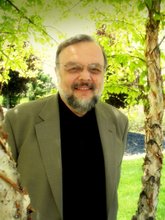
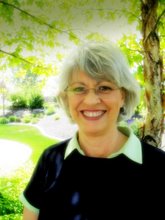
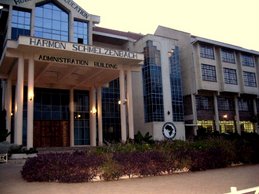
Welcome to our Blog! What are the goals of "Africonnection"? To further the Kingdom. To help North American friends make a connection with the lives and experiences of their brothers and sisters in Africa. And to give North American friends an opportunity to partner with Africa Nazarene University as it supports the Kingdom through the Church of the Nazarene in Africa.

Mark and Nancy

Monday, November 21, 2011

A Report of Blessings--A Plea for Help

Well Hello!


Our last blog post to you was sent nearly 18 months ago--sometime the summer of 2010.  Since that time, we have bought a condo in a walkable part of San Diego with restaurants and book and coffee shops nearby. Mark is very much enjoying his job at Point Loma and Nan is teaching a parenting class and has been named a part-time university chaplain at our nearby graduate campus. We feel so happy and so fulfilled and that the Lord is REALLY taking care of us.


This post isn't mainly about us, though. It's about a phone call we got and the thinking it made us do.


Our regular readers (or the readers of the first African Voices book NMI distributed last year) have already met Rev. Ermias Mekuria. He's a bright, deeply faithful husband and father of 3 handsome sons. He and his wife Mulu stayed in our home for a few days when they were doing deputation in Southern California earlier this year and they're just FUN. We laughed, went to a couple of Ethiopian restaurants together, talked about our kids, his wife Mulu had brought packets of exotic spices from home and she and Nancy spent HOURS cooking a delicious Ethiopian dinner--it was wonderful.


Rev. Mekuria is  the Field Strategy Coordinator for the work of the Church of the Nazarene in the Horn of Africa. One of the things we've noticed about Ermias, John Yual who's the District Superintendent for all of the Sudan and others is a not-entirely-explainable JOY that they carry around with them. This isn't "things are going well for me" joy or "I'm headed into the holiday season" joy. This is "The JOY of the Lord is my strength" joy. It has to be. Because things for Nazarenes in the Horn of Africa are really challenging.


That brings us to the phone call. As he does when he's in the US for denominational meetings, Ermias checks in--we're sure he does it with others as well. He called last Monday morning just to say "hello", to give greetings from his wife Mulu and some of our other friends in the Horn. After we'd chatted for a bit, we asked him, "How can we be praying for you?" And he said quietly--"Well you know we're still struggling with the drought and the famine in the Horn. We'd be very glad if you'd pray about that." It was typical of Ermias: no drama, no request for anything OTHER than prayer.


After he hung up,though, we couldn't get the conversation and the images of what our brothers and sisters are going through in Ethiopia, Sudan and Somalia out of our minds. The fact that OUR lives are so pleasant and that WE are headed into a time of turkey and pie and gifts provided some thought-provoking context for Ermias' prayer.


People handle inequity in different ways. Nan and I are trying to think what God would have us do with the challenges in the Horn of Africa in LIGHT of our blessings. We'll let others decide whether it's wrong for there to be such great disparities. Mother Teresa says the poverty that really matters most is SPIRITUAL poverty--the lack of God's empowering and enriching presence in our lives. Our Ethiopian and Sudanese brothers and sisters are genuinely RICH in faith and in commitment to God, and the church in the Horn of Africa is growing as a result. That said, Africans in the Horn are suffering. Nazarenes in the Horn--pastors and laypeople--are watching their children suffer.


We've always said that your mission field may be your neighbors or someone in your church. If the Lord has laid a burden on your heart and you're going to be preparing gifts for an elementary school or fixing dinner for a needy family or doing something extra nice for one of your own KIDS who's been out of work for awhile, and the Lord tells you that's your mission, then thanks for the difference you're going to make and many blessings.


If on the other hand, you are feeling a special sense of God's blessing this Thanksgiving/ Christmas season and feel the Lord suggesting that you might be part of a miracle for a Nazarene family on the other side of the world, then the rest of this blog post is for you.


As it does often, our church, the Church of the Nazarene, is stepping up and providing a way for compassionate Nazarenes to make a difference in the Horn. Rev.Ermias asked for prayer and of course we would encourage you to do that, but somewhere in Ethiopia or the Sudan right now there is a Nazarene mother or father praying for food and water for their struggling children. By clicking on this link: NCM Horn of Africa Miracle you'll be directed to more information and a way you can contribute to the miracle the Lord wants to do in the Horn of Africa. Just imagine, you enter a number and hit a button on your computer and in a few weeks a Nazarene family gets up from their prayers and looks outside to find bags of food being delivered by truck because of you! 


We feel so very blessed, we've prayed about how to communicate our gratitude to the Lord with funds to put food and water on Nazarene tables there. If you feel moved, we'd encourage you to give as well. Thank you in advance for your faithfulness.


Many blessings, Happy Thanksgiving, Merry Christmas,


Mark and Nancy Pitts

Wednesday, June 30, 2010

Transition Post--So Long But Not Goodbye


Well, where to start? As we shared in a previous post, we had made the decision not to extend our commitment to World Mission and Africa Nazarene University beyond its original length, and in fact had to abbreviate it just a bit to meet the wishes of Point Loma Nazarene University, Mark's new employer.

First perhaps a bit about the last few days and weeks at Africa Nazarene and then a report and some pictures from our first days in the US and then finally some things we've learned.

"LATTER DAYS" IN AFRICA

Within the last two months, Nancy and Mark got a couple of things done that had been on the "to do" list for over a year. In late April, Mark flew to Johannesburg and did interviews for the second "African Voices" NMI book we have been asked to do. He spent several hours over two days with Dr. Enoch Litswele (pictured), whose parents became Nazarenes in the 1920's and who has been a Nazarene pastor, educator and Bible college head in Malawi, South Africa, Zimbabwe. It was fascinating to hear his stories of the history of the Church of the Nazarene, especially in Southern Africa.


 During that same trip, Dr. Filimao Chambo stepped away from strategic planning sessions to spend several hours being interviewed. He too, has a lengthy history with the church of the Nazarene. His family has been part of the denomination for over 85 years. From him, though, Mark got a glimpse of  the future of the Church of the Nazarene in Africa. Blog readers who have access to Nazarene missionary books will be able to read both of those chapters in a book scheduled to come out in 2011.

Mark also got to visit with Spencer and April Baggott who were in South Africa for medical appointments, and their great kids, Luke and Abbie (pictured)

In May, Nancy and Mark went with Rev. Don and Evie Gardner, our Field Strategy Coordinator and his wife, to the Maasai Mara--kind of the classic Kenya safari experience, and it did not disappoint. We stayed in a tented camp and spent one memorable afternoon with lions walking between our vehicles and roaring within 20 feet of us (pictured). It was a wonderful goodbye to the amazing wildlife of Kenya.


In early June, the goodbyes began officially. We can say without qualification that never in our past lives and we expect never in our future lives will we experience the warmth and kindness of our leavetaking in Kenya. Over the course of 2-3 weeks there was a University "high tea" in the Helstrom Student Center auditorium with 600 people in attendance and ending with our being pulled onstage to begin a kind of African "conga line" of students, faculty and staff that snaked its way 3-4 times around the auditorium floor. Nancy said the highlight was watching Mark dance. Mark felt her smile had a subtext to it. When Mark went by Pastor Bekke, a wonderful preacher and singer from Swaziland, a nation whose Nazarenes tend to be pretty conservative about dancing, Mark said, "Pastor Bekke, please don't tell the Swazi church I was dancing!" Pastor Bekke said, "No, I will tell them you were just happy!" 

That same week there was an evening goodbye dinner for faculty and staff. There were also ten other events--goodbye parties with the Religion Students Association (B.Th. grad dinner in our home pictured), the International Students Association, with the Alumni Association, with Mark's staff, with the Department of Religion, the congregation of University Church, with the missionaries--a dozen goodbye events in all. Beyond that, as we tried to complete our packing, we finally had to put a note on our door saying, "We would love to talk but we need to finish our packing" because, in the African tradition which marks intimacy and real friendship, people were dropping by all day to bring small gifts and to make short, really eloquent speeches about something one of us said that touched someones heart. Because Africans value oral tradition, they are more formal in their speech on such occasions, and they make a point of remembering something one of us has said. 


On Thursday, we were acknowledged and thanked by the Vice Chancellor, Professor Leah Marangu and on Friday at Graduation we were thanked by our Regional Director, Dr. Filimao Chambo.

Now an acknowledgment and disclaimer: First, the primary point we hope you can gain here there is that Africans are world class in their ability to communicate the importance and value of a relationship. We continue to think about and copy some of the things we have learned from them about relationship.If we had done the same thing on an American campus, there would have been a formal event with a plaque and some nice speeches, but that the level of support here is uniquely African, all out of proportion to the amount of time we have been here from an American point of view.

Second, Mark would say that a good portion of the warmth of the goodbyes comes from having a wife who is SO relational, who opened her office to students and heard their concerns and advised them. African kids have very busy parents and they are lonely for adult mentors. Nancy served that role with them and also with faculty and staff in a wonderful way. 

Even so, we do want to thank our African colleagues and students and friends for the incredible, unforgettable warmth of your goodbyes to us. We literally will never forget it and hope to retain relationship with as many as possible of you. That "deal" of buying you lunch if you get to San Diego is a real offer!

Friday, June 18th began with Mark and Nancy participating in graduation (including a symbolic handoff of the ANU ceremonial "mace" from Mark, through the Vice Chancellor, to the new DVC Dr. Rodney Reed) and ended with Mark and Nancy getting on a plane for LA. Due to flying with the sun, we were able to have ANU graduation lunch on FRIDAY with Filimao Chambo, Jon and Margaret Scott in Kenya and a "Father's Day" lunch on SATURDAY with our children and the new grandbaby in LA (see picture).


"EARLY DAYS" IN CALIFORNIA

After our lunch on Saturday with the kids, we crashed in a hotel for a couple of nights to rest up and then picked up an air mattress and a couple of lawn chairs and moved into our  new condo (street view pictured--rented at least short-term from Point Loma). Within a week we had installed internet (aaaahhhhh--the luxury of a connection that mainly WORKS and is pretty zippy!), gotten cable, gotten SIM cards or topped up our phones, purchased a car, signed up for Point Loma benefits, and generally started our new life. Our first night in San Diego, we had dinner at George's Ocean Terrace, a wonderful restaurant overlooking the Pacific Ocean (Nan and Mark pictured there).


In spare moments, we worked on the chapters for the second African Voices NMI book--more incredible stories of capable and faithful Afrricans doing important Kingdom work. Yesterday, in an amazing coincidence, BOTH of our shipments--the one from Nampa and the one from Kenya--arrived within 3 hours of each other! We got bed and other furniture wrestled into place, but as you can see from the boxes in our living room (pictured), still a lot of work to do!

SOME THINGS WE LEARNED

In conclusion, some insights and thoughts about our time in Kenya:
  •  If we had it to do over again, would we make the same decision to spend three years in training and serving, WOULD we do it all again? Our answer is an enthusiastic "yes."   It was a real experience with some aggravations and disappointments and challenges in it, of course. Even so, our time at Nazarene Theological and at Africa Nazarene University has been a highlight of our experience-blessed lives.
  • We’ve learned that twenty-first century missionary training is very different from training and philosophy of missions a century ago. As a result, it’s useful to us in a variety of situations: listen more than we talk, cultivate partnerships, accept and allow for cultural differences, suspend quick judgment, avoid authoritarian language, accept that understanding comes in several layers over an extended period of time.
  • We are encouraged and blessed by the energy and growth of the church in Africa.
  • We are constantly amazed at and instructed by the quality and the level of commitment of the denominational leaders in Africa. No one there told us, “Be more like us”, but how do we process the fact that two of the people in this book are training to go back into a creative access area where they may be estranged from their families and their lives will be in jeopardy for sharing the gospel, where one interviewee was part of a house church in which 80% of the members were martyred in 18 months, where several of those we have spoken for these interviews and in other contexts have left jobs or training in engineering, veterinary medicine, or government service to follow the call of the gospel? As we return to the US, what do we do with the example of sacrifice made by some of the people featured in this book?
  • Our clear and easy “answers” to some of the challenges in Africa have melted away as we understand better the complexity of the circumstances. We recall the essayist who said, “There is a simple answer to every complex life question, and that simple answer is always wrong.”  
  • While it’s true that there is poverty and corruption and disease in Africa, it is also true that Africa is making progress in many areas and that the global church needs to see Africa as a real place—not all safaris or all slums, but a place with gleaming shopping centers and well-travelled and well-dressed people and well-educated people as well as those struggling with the well-documented challenges.
  • Because we have heard African denominational leaders say such things repeatedly, we believe that Wesleyan-Holiness is a unique and effective resource in addressing some of the key challenges in Africa. The idea of “prevenient grace” is good news to people for whom fatalism about the future is a natural response to great hardship. The idea that Christians are “co-laborers” with Christ is a powerful response to dependency. Our interviewees point to holiness over and over as an antidote to corruption and nominal Christianity if we dedicate ourselves more to imperfectly living it rather than to perfectly defining it.
  • For ourselves, we are praising the Lord for the new opportunities he is providing, but admit to being in “listening and abiding” mode for his will beyond new business cards and position description. It’s so easy to see missionaries as the front line in evangelism and the Western world as a de-militarized zone, and yet the newspapers provide painful evidence that darkness is at work in comfortable American neighborhoods as well. In a powerful NPR interview before her death, Mother Teresa pointed to spiritual poverty as a more debilitating condition than economic poverty and encouraged First World people to engage close to home as well as far from it. As we said in our deputation services, we do believe this is part of what the Lord is telling us.
Finally, faithful readers of Africonnection and friends and colleagues and "fellow-travelers" on this journey of faith, we thank you more than we can express for your engagement, for your notes and face to face comments telling us you were reading, and for your kindnesses to us in other ways. The Church of the Nazarene, like all organizations, is changing, but we have benefited from the tradition of strong prayer and emotional support for missionaries. Two suggestions for you to consider: first, please do look for other international missionaries to whom you could extend some of your prayer and emotional support. 

We'd also ask this--there is a new wind blowing that encourages committed Christians to have missionary hearts in more familiar settings. We hear occasionally from some young people or people in transition who say--"I'm wanting to serve God in a deeper way. Is there some work I can do in Africa?" Now the answer to that question is always "yes," but we worry a bit that the reason it's phrased that way is because serving in Africa (or to some extent in China or in India) has been seen as kind of the "gold standard" for service and commitment. 

Even some of our African friends, though, are saying to us--why don't your people serve closer to home? And of course Americans DO serve close to home--in all kinds of volunteer or service organizations, paid and upaid but it would be so wonderful if the church could extend its emotional and spiritual support in deeper, richer ways to those "local, tent-maker missionaries" and to see the work THEY do as part of a new "gold standard." Could you look for someone like that and give them the level of support and prayer you have given us? Many of you will say--I'm already doing that, and we thank you for, as usual, being way ahead of us in your insights and faithfulness, but one final thought--any chance the Lord is asking YOU to be that "new era, local, tent-making missionary"? 

For ourselves, we believe this new kind of missionary service is what God is calling us to, but we are feeling our way and praying for God's daily guidance and insight. The path is not clear, the job description and parameters of this new chapter are not set. You won't be getting these blog posts anymore (somehow pictures of lions from the San Diego Zoo just don't have the same "zing" as pictures from Maasai Mara!). But we would covet your prayers and we will be praying for you that each of us can have insights about what God is calling us to do in this new era where ALL missionaries hearts are moved, but only SOME missionaries addresses change. Blessings on you, thank you again, and best wishes as you seek the Lord's will for your own area of service.

So long but not goodbye, 
Nancy and Mark

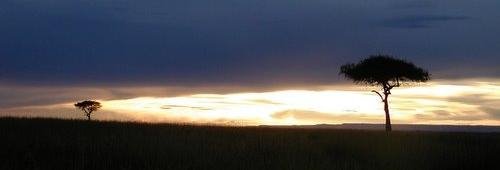
See Amboseli sunset and Pacific Ocean sunset pictured below.


Monday, March 22, 2010

March Update and Transition Information

It's Saturday morning here--an opportunity for spending a little extra time on our devotions and for catching up on some household chores. It's hard to believe that we've entered the third year since our transition from Northwest Nazarene. A lot of amazing experiences, wonderful conversations, and with God's help, some significant accomplishments in that time. What's the news since our last entry?


In late December and early January, our "last" adult child, Benjamin, came to Kenya, completing the family visits. He welcomed in the new year in Kenya, visited the Nairobi National Museum and Amboseli National Park.In the picture, we got such a kick out of the Maasai, who are famous for their height, being overshadowed by our vertically precocious son! (Yes, and you have permission to slap your leg when you remember that his father Mark is 5'8" and a little horizontally precocious!) The Park showed very clear signs of the terrible drought Kenya has been experiencing. The Maasai we visited with said they had started the drought with over 800 cattle and ended it with 300.  We would ask for your prayers for the Maasai and for all people in the rural areas of Kenya and other parts of Africa. 

The NMI book African Voices has been released, and should be available for local NMI chapters right now. Since we were primarily just the editors of the inspiring words and ideas of our African interviewees, maybe it's ok if we encourage you to read the book and experience some of the blessing and inspiration and challenge WE experienced as we talked with the leaders featured in the book, including an interview with our new General Superintendent, Eugenio Duarte.

In addition, NMI has asked us to do a second book of interviews, so we are having additional conversations.  Interestingly, two of our most recent conversations have been with former Muslims who are now passionate Christians and Nazarenes. They have faced and are facing terrible persecution as a result of their faith. As a result, we have agreed to disguise their names and other details to help protect them from further persecution. One man, for example, was a member of a small house church in the capital city of his home country. Over a period of less than two years, almost 90% of the members of this church were martyred for their faith and only this man and one other are still alive! And yet this man has persevered to become an ordained Nazarene minister and graduate of one of our developed-world Nazarene institutions. We have not finished transcription of his interview yet, but when we do, we'll share some excerpts with you. It is inspiring and challenging to us and we think will be to you as well. An interview we completed just this last Tuesday was with two young men, also both former Muslims, who have been inspired by the truth of the gospel and want to bring that truth to the people of their own country.  Will you join us in praying for all three of these men, that God will protect and guide them in their work?

(Picture lovers don't give up--there are two more pictures near the end, including a "pre-grandbaby" picture!)

Some other highlights?
  • At ANU, Nancy is teaching Christian Beliefs and Spiritual Formation. In a way, though, these are only the small parts of her work. The main part (this is Mark talking here!) is mentoring and mothering a constant stream of students who come in and out of her office.
  • The University has just completed, under the leadership of Vice Chancellor Leah Marangu, Chancellor Jerry Lambert, and facilitator Dr. Jim Copple, a very significant "Youth Summit" whose goal is the empowerment, education and employment of Kenyan Youth. Millions of Kenyan young people are unemployed, and millions more will be born in the next decade. This summit was co-sponsored by ANU; Nazarene Compassionate Ministries, Incorporated; USAID; the Kenyan government and several Kenyan corporations. It was officially opened by Moi Kibaki, the President of Kenya. Nazarenes in the US can be justifiably proud that their University in Africa is engaged with Kenyan government, business and academic leaders, American government officals, and Nazarene officials, is working on practical solutions to some of the persistent challenges in Africa.
  • Mark is working with departments on several projects. The University is implementing a new academic database and trainers from the US were on campus last week training staff and faculty. The University is introducing several new academic programs next trimester and Mark is helping program launch coordinators in programs including Law, Peace and Conflict Resolution, Counseling, as well as the distance learning delivery of Christian Ministries and Commerce. In addition, he's helping the Department of Religion with a proposal for the start of a new and badly needed doctoral program. It's a bit of a stretch for the Department from a Western perspective, but is a high priority for the denomination in Africa and would make further use of our good group of doctorally prepared Religion faculty.
What's the transition news?

When we accepted the invitation to come to ANU, we agreed that we would be away from the US for three years. As we mentioned earlier, we are nearing the third anniversary of our transition from NNU to ANU. While our intent has always been to return to the US after three years, we had hoped that it could be marked from our arrival in Kenya in January 2008 rather than from our departure from NNU. Nevertheless, since Mark needed to find employment in the US upon our return, we shared our intentions with the ANU Vice Chancellor and World Mission leadership late last year and began networking. 

We prayed for a place where we could continue to serve the Kingdom and the denomination, and in our most audacious prayers, we prayed for a place close to our five adult children in LA. By early January, Mark was in conversation with three institutions--one in the Northwest and two in Southern California. By mid-January Mark began talking in earnest with Point Loma Nazarene University about a position as Vice Provost for Academic Administration (the position Keith Bell currently holds, for our California readers).


 In mid-February Point Loma very generously invited both of us to come to San Diego for interviews and encouraged us to spend a few days with our children in Los Angeles, including Andrew's wife Birge, pictured with our first grandchild. Two days after our return PLNU offered Mark the position which he accepted, with the transition to happen as the current Vice Provost retires at the end of June.


Leave it to the Lord to answer our prayers so extravagantly! To be called to a Nazarene institution two hours drive-time from our kids with a view of the ocean from nearly anywhere on campus points again not just to God's faithfulness, but to his desire to answer prayers generously--spectacularly, even! Mark is excited to work with the outstanding leadership and faculty at Point Loma as well as to being closer to our children. Nancy is thrilled to be moving within two hours of a new grandbaby scheduled to be born this month. We want to praise the Lord for his faithfulness and answers to prayer, and yet...

We haven't been kidding when we've said what a wonderful privilege it has been to work with the students and staff at ANU. It has been and continues to be one of the highlights of our experience-rich lives. We're already making a list of "things we'll miss in Kenya." We'll share that list with you another time. 

It's fairly common wisdom that the transition from the US or the UK to the mission field can be very challenging. Thanks to the wonderful care we have received from ANU staff and our field director, we have really not found it so. What's less well-known is that the return FROM the mission field to the US or UK can be a significant challenge. Would you please pray for us in this regard? We genuinely feel that the Lord is directing us back to the US, but we leave such warm feelings and need and opportunity for service here. We see such sacrifice and commitment here.  The question we are asking each other and the Lord is the same one we were asking as we did deputation last summer: how can EACH of us be "missional?" How can we be obedient to the Lord's call for witnesses wherever He has placed us? 


We are still almost three months away from this transition, so there will be additional time to talk about some of the highlights of our time here and some of the things we've learned, and to thank those of you who have been such faithful readers and supporters of us on this journey. In the meantime, thanks as always for reading, for inviting us into your churches and lives, and for your commitment to the Good News of the Gospel of Jesus Christ.

Thursday, December 24, 2009

Merry Christmas and End of Year Summary


Hello--We are so grateful to each of you who has read our blog this year and it is our pleasure to wish you a very Merry Christmas and a Happy New Year. We agree with CS Lewis about alot of things, but we disagree with him about Christmas greetings. He said if he didn't have to write so many Christmas cards he would feel alot more "peace on earth and goodwill toward men." Maybe if there had been blogs and Facebook and e-mail he would have felt differently.

Christmas is a "lower key" event in Kenya--decorations don't go up in shopping centers until late November. Employees typically only get Christmas day off work. Most people go "up country" to the homes of their parents for Christmas Day. This post includes a picture of Nan on a visit to Kisii in Western Kenya, a Kenyan Santa Claus, and a Kenyan "clown" at a children's Christmas event in one of the shopping centers.


University Church of the Nazarene will be having a Christmas morning service at 9AM, followed by candy for the children and tea and mandazis (triangular, lightly sweetened Kenyan donuts). At noon, we will be hosting 25 international staff and students for a Christmas dinner in our home. We'll have students from Zimbabwe, Democratic Republic of the Congo, Tanzania, Malawi, the US, and even two new students from China. Mark will be making chicken stew, rice, cabbage and the Vice Chancellor has donated part of a goat--a local favorite. Some guests will be bringing food from their home country and all guests will be bringing a story or song from home. We're looking forward to it.


Some highlights of the year:

  • Completion of Commission for Higher Education Self-study Document--this involved 6 weeks of work for Mark and a team at ANU in preparation for an accreditation visit. One of the things that came out was ANU's success in research, in helping students who come in with some academic challenges to be successful. For example, a student team from ANU has been chosen in a competition with other Kenyan universities, as one of four to represent Kenya in an international competition among Kenyan university students. ANU prepares its students very well.
  • Publication of "African Voices" as 2010 NMI book. American Nazarenes should see this book among the set of missionary titles being offered in 2010. It was a privilege to do the interviews and edit the book. We hope you enjoy hearing several of our African leaders "in their own words."
  • Trip to Manchester--described below
  • Election of Eugenio Duarte as General Superintendent and appointment of Fili Chambo as Regional Director--We have already communicated our respect and appreciation for these men. When you pray, please remember them and the tasks that they are called to accomplish.
  • General Assembly in June and early July
  • Deputation in July and August--It was our pleasure to connect with many, many of you during our deputation--in Indiana, Idaho, Utah and California, we enjoyed our time with you.

Saturday, November 7, 2009

Nan's October and November Alumni Events


As coordinator of alumni activities at ANU, Nan oversaw two significant events in October and November. On Thursday, October 29th, the alumni presented a chapel. They shared with students--in ways no one else could do as well--the importance of making good use of their time at the University, On Sunday, November 1, Nancy and the alumni council sponsored the "Second Annual ANU Alumni Bash", this time held at Osiota ("Stone" in the Maasai language) located at the bridge on Maasai Lodge Road.


In fairly typical fashion, the event, scheduled for 1:30, began a bit late, but once it started, provided a mix of good food, lots of laughter, and stronger connections between the alumni and the University.

A survey distributed to the alumni showed that 97% of them (all but one) are employed--a wonderful blessing in a nation where jobs are hard to get. Also, 87% of alumni indicated that their ANU education had prepared them "better" or "much better" than their work colleagues from other universities. We're pleased at the success they are having and at their satisfaction with the education they received at ANU.

Manchester Trip

In mid-October, Mark took part in a week-long Manchester UK meeting of international graduate theological educators in the Church of the Nazarene.  There were representatives from Asia Pacific Nazarene Theological, NTC-Brisbane, Nazarene Theological Seminary in the US, Brazil Nazarene College in Campanos, Brazil; Seminary of the Americas in Central America; Korea Nazarene University; as well as NTC-Manchester.

Although he had met and spent time with several of these people before, Mark continues to be blessed and  impressed and "taught" bwith the godly witness of these people:

  • Dr. David McCullough, the current school principal of NTC-Manchester, served as the van driver for the group during the five days the team was there. He was gracious and patient with the group even though the time included NTC-Manchester graduation and the arrival of his board in two weeks!
  • Dr. Herbert McGonigle, a world-famous expert on John Wesley, is recovering from an illness, but Mark noticed what a wonderful, attentive listener he was, and how he made every person feel special.
  • Dr. Abraham Im, president of Korea Nazarene University, the largest school in the Nazarene system, was upbeat and inspiring in spite of recovering from the death of his wife just recently.
  • Dr. Ron Benefiel, the president of NTS, who had helped organize the meeting with Dr. Jerry Lambert, conveyed by his manner and his words that all members of the team were important and that no one institution was orchestrating the actions of the others.
  • Dr. San Young Lee(pictured), a second-generation Korean Nazarene with degrees from Princeton, Duke and Vanderbuilt, and academic dean at the Nazarene seminary in the Philippines, gave us an update on how the seminary became a place of refuge for up to 120 neighborhood people during recent storms and floods. In your prayers, it would be especially good to remember Dr. Lee and the faculty and staff at APNTS as they attempt to return to ordinary.
Some other highlights of the trip:
  • On Saturday, the group attended NTC-Manchester's graduation in the wonderful Whitworth Hall on the campus of the University of Manchester. Like alot of victorian-era buildings, it was built as an academic building but looks like the inside of a church: at the back and on the sides, 40-foot tall stained glass windows. Roof supported by heavy, dark oak beams. At the front, a two-story structure with choir loft and huge pipe organ above and seating area below.

On Sunday morning, the group attended the Longsight Church of the Nazarene in Manchester, and then had meetings Sunday afternoon and Monday.


On Tuesday, after the meetings had been concluded, the group drove two hours in the van to Epworth, and got to tour the second of two pastor's homes in which John Wesley was raised, St. ANdrews Anglican church where his father Samuel was pastor for 30 years, had lunch at the Red Lion Inn where Wesley had stayed as an adult, then visited the Wesley Memorial Chapel in downtown Epworth.Some additional pictures below.


Wednesday, September 16, 2009

African Lives #3: John Yual

John Yual 
      John Yual was born in 1973 in Southeast Sudan near the Ethiopian boarder among the Nuer tribe. He and his brother and sister were raised by their mother after the early death of their father. John was not allowed to attend school because, at the time, education in Sudan was reserved for Muslims. His family sent him to Ethiopia to protect him from the Sudanese army. There he connected with the Church of the Nazarene. After working as a trainer and church planter, he has been appointed as district s for Sudan, shepherding over a thousand pastors across nearly a million square miles. An early European writer, travelling in the Sudan, called the men of the South Sudan the "natural gentlemen of Africa." This seems a good description of John: tall, intelligent but soft-spoken, communicating a quiet wisdom. In May of 2008 he received his bachelor of theology degree from Africa Nazarene University.
      At the age of 15, John’s uncle Gatkuoth Toang shared from the Bible with him.
      “He told me about the gift of life through Jesus Christ, that Jesus died for my sins, and that when I give my life to Him He will liberate me from being a slave to idol worship. I was amazed at the fact that somebody died for me, and so I tried to know much about the reasons why.”
      In 1989, when John was sixteen, life changed dramatically for him.
      “I was in a cattle camp, and when the troops came they said they attacked our village because there was a rebel. So the Sudan army came at night to attack the place, and one of them said it is better for you young guy to run for your life, don’t be here. In Sudan there are some places where one can only travel at night and not by day for security reasons. The place I was living was not very far from the border of Ethiopia, and I managed to cross to the other side within three days. I was with my friends--a group of young men--and we carried some cattle with the idea that when we reached Ethiopia we could sell the cows and find money to survive.
      John ended up in a refugee camp, and though life there was extremely hard, it was there that he was able to receive schooling and learn to read for the first time. 
      Another turning point happened for John in 1995 when a group of Sudanese friends told him about a new church in Addis that had English services. Since he was interested in learning English, John started attending the Church of the Nazarene. What captured his thinking was the doctrine of holiness. At first it brought multiple questions.
      “Does it mean other churches are not holy? In Ethiopia there is the Orthodox Church, and they call themselves the most holy people, and this other holiness I am hearing, is it the same or there is a difference? These were my questions. Finally, I got the message that it is not just an outside adornment but an inner transformation that is revealed outside.”
 John joined the Church of the Nazarene in Addis Ababa and began working with the youth. Gradually he was given more responsibility. Although he did not see himself as a minister, when the other pastors at the church immigrated to the United States and Canada, John experienced the grace of God giving him more interest in ministering.
      “My first time to attend district assembly, some church leaders met with us and said we want a person who will train pastors in Ethiopia and some day go to Sudan and start the church. I said, ‘OK, I don’t have a person like that in mind.’ We took a course, and the leaders say they checked the criteria of who will be fit for this job and decided it would be me. They ask me if I would be willing to train pastors, and I say, ‘If it is the plan of God.’ They ask me, ‘What is your priority while you are in the refugee camp?’ and I tell them, ‘To go to America or Australia or anywhere in the world because the life in the camp is terrible.’ I prayed and decided to train pastors, but at the same time my wife’s uncle sent us visas to go to Australia. I say, OK, this visa I was wanting for many years is here . . . what is going on? I prayed about it, shared with my wife, and we say we will go ahead and train pastors. People in the camp say, ‘Are you out of your mind?’
      “In 2003, during the regional conference in South Africa, I was sharing with my field director that in Sudan we do not have a church there. So I asked him, ‘What about we start a church there?’ He said that it was a good idea, but the question was how can we go there? There was no transport, no means of communication, no security . . . how can we go there? He suggested that we can wait until peace prevails, then we can go. I said, ‘Peace may come any time, but our people need Jesus before peace.’ He said, ‘Ok, I cannot stop you.’ After we had finished our course it was February 2003, and by March 2003 I was on my way to Sudan. I went to one of the towns, Gambella, which is on the border, and waited for some people who could walk with me. One could not walk alone because it was insecure. You must be accompanied by people who have their own guns for protection. I found some fifteen young guys who came from Sudan for trade. After talking to them they said it was OK, I can join them, and we went. We had to walk for seven days before we reached the Sudan border. There were robbers who would organize themselves to disturb the border so you could not cross any border without seeing trouble. Even the local tribes were fighting each other because of Arabic influence, and there was no government at all. On our way we found more than twenty people killed who had been walking ahead of us.
      “In my mind I said . . ., ‘OK, the church is not here, how can I start it?’ I said to myself that I must start it by teaching. I called some guys under the tree to talk to them if they were willing to listen to me. I talked to them about what the Bible says they need to do and whether they could accept God.”
      For one-and-a-half months he traveled the countryside, teaching beneath a tree to whomever would listen. In that time he started thirteen churches. That was 2003, and later on in October of that same year thirty more churches were planted.
      “When peace came we were already there. That is how the church came to existence in Sudan.”
      Though today there are more than a thousand Nazarene churches in Sudan, there continue to be challenges with developing and communicating with leaders in the field.
      “Even today in Sudan there is no good communication, especially in southern Sudan where I have been for ministry. Most of my churches in south Sudan I cannot reach them using my car; I must walk with my leaders to visit the churches there. I think God’s grace is how come, without communication, the church is growing. It is something that I myself . . . cannot understand; it is God’s grace that makes all those things to happen. I get letters saying, ‘We have started a church here,’ but I did not know this people, they said that they heard about the Church of the Nazarene so they decided to start one there. They invite me to go, so I send some pastors and my assistant to go and see those places and organize and teach them. What I can say is that it is the grace of God all this happening.
      “The only thing you do as a church planter or an evangelist is to pray, ‘God, if I meet three people, show me one . . . someone who can really buy this vision. If I find ten, give me two.’ Because of this prayer He gives me people, and even when there are many He helps me to identify one. When you want to plant a church you do not ask for qualified leaders, you just ask for people who are willing to serve God. And when you talk to someone, the Holy Spirit will help you to know that this one is real, genuine, and this other one is not serious. The Holy Spirit gives you discernment to know who is who.”
      As district superintendent of three districts in a country that is nearly one million square miles, John has a major challenge communicating with the one thousand pastors he shepherds. However, through the use of strategically placed satellite phones, John can call the pastor with the phone who will then send out letters to the other pastors to gather for a pre-arranged call. It takes some pastors two days to walk to the gathering, but the call from John serves as an encouragement and a planning tool for the pastors.
      John was asked to share his insights on the following topics:
·  About holiness: “When we came for the first time in Sudan we started the message of holiness. They actually didn’t just want to know about holiness, but they also wanted to join the Church of the Nazarene. In Sudan we have been going through difficult times because of civil war, and so people need love. When they see you showing love and living a life of love they get encouraged and are attracted to know what is happening there. I think people are interested in those who walk the talk. In Sudan our problem is peace, peace between neighbors. We need a solution where believers can live in peace with our Muslim neighbors. When they see us living in peace, love, and unity then what we preach is able to make sense to them. We don’t preach hatred against the Arabs. To win Muslims we need to spend time, develop a friendship, show love and care, then once we have a good relationship with them, they will want to know more about the gospel.”
·  About Africa: “Before coming to Africa Nazarene University, when I thought of Africa I thought of my country only. Now, even if I am doing well in my country, I know that there is more that needs to be done in Africa, in the entire church, and for the sake of the Kingdom.”
·  About contextualizing the gospel and church organization: “If we go through the Church of the Nazarene manual, there are parts that do not make sense to Africans. An example is the issue of associate members. In my community you cannot tell people that you are a full member and the other is an associate member in the church. That says to the associate member that ‘we do not need you here.’ We need to remove that part of the manual and differentiate between leadership and membership.”
·  About how the global church can pray: In the last twenty years conflicts in Sudan have resulted in more than four million people being displaced and two million deaths. A peace agreement signed in January 2005 gave southern Sudan autonomy for six years, which has resulted in an uneasy truce.
“If war comes, where will our church be during that time? What will be the future of our church if another war breaks out in Sudan? This is the first priority that we need prayer for our people, that God may bring peace because He is the only one who can bring the peace that we need in Suda

Mega-update: Back in Kenya Section

OK, so what's this about Nancy speaking in a Hindu temple? We'll get to that in a minute. When we got back to ANU, or shortly thereafter, some things had changed. Here are some key items, good and bad:
  • LACK OF RAIN--When we left, it was green and lush in Kenya. When we returned, it was brown and dry and lots of people were suffering. Only yesterday, we saw two dead Maasai cows in a ditch on the way home. The herd of goats, cattle and sheep that used to pass at a distance from Mark's office window, isn't doing so any more. People and animals are really struggling. Please pray for rain and for enough food for the people to survive until new crops can be planted or harvested.
  • WATER AND ELECTRICITY RATIONING--Because some electricity is generated by hydro-electric dams, the lack of water is creating a lack of electricity. Here's another instance where good planning on the campus insulates us from challenges: the University dam on the Mbagathi River means the plants and grass get watered and the generators fill the gaps in most electrical coverage. Nairobi is a different matter. People in the city often have electricity only every other day and are dealing with water rationing as well.
  • TARMACK! It's true that it's on the street to the LEFT of the front gate not Maasai Lodge Road, and it's true that the treatment is kind of "thickness challenged", but it's black and smooth and we're really pleased. (Pictured below: white metal ANU gate to the left. Black tarmack beyond the barrels directly ahead.) Keep praying that Maasai Lodge Road is next.
  • ZEBRAS--No question zebras are cute and we're seeing lots more of their cuteness these days--up until we left, we'd seen zebras from our balcony a couple of times--and at a looooong distance. Since we got back, we're seeing them directly across the canyon and perhaps a football field and a half away.
  • MORE INTERVIEWS--We had explained in this blog earlier that we did 10 interviews with current and future Nazarene leaders in Africa as part of editing a book of interviews for Nazarene Missions International. Without going into much detail right now, we're being asked to do more interviews. Dr. Filimao Chambo, our new Regional Director, has agreed to be one of these, so "watch this space" for more interviews with current and future Nazarene leaders in Africa.
OK, now about that speaking engagement in a Hindu temple: We've mentioned earlier that we've struck up a friendship with Mr. Vayas, an active member of Arya Samaj, which means kind of "Aryan community." Last week, Mark got a call from Mr. Vayas inviting us to a celebration of their 106th anniversary as a religious community in Nairobi and a request for Nancy, as an ordained Nazarene minister, to be part of a panel addressing the question, "What can the world religions do to encourage peace in Kenya and the world?"

Before the time of the panel, we were invited into their religious service in another part of the building: religious songs being sung by groups of 3-5 children, women and elderly people sitting on mats around firepots raising aromatic smoke. After that, a world-class cute group of kindergarten and pre-school children presented a one-hour variety show. There was singing and dancing and recitation of what we used to call "pieces." Also, though, in the "we're not making this up" department, one of the features was a 5-year old dressed up like Ghandi and giving advice to the audience.

The panel was the last item of the morning. The other panel members included the chairman of the Hindu Council in Kenya, the education director of the Seventh Day Adventists, a pentecostal bishop, the chair of the department ofr religion at the University of Nairobi, and three other Hindus. Nan (Mark is saying here) did a really wonderful job, and got a big round of applause when she said we were going to have an Indian daughter-in-law in August.

After the panel, we were invited to a great, spicey vegetarian meal. Anyone who thinks vegetarian food has to be wimpy and flavorless hasn't had really good Indian food.

Soooo--that brings us up to date on our own activites. As promised earlier, we'll follow up with our interview with John Yual, DS in the Sudan. We love what we're doing, but if you're reading time is short--skip what we say and read what John Yual says.

Have we mentioned to you lately how much we appreciate your prayers and reading (at least some part of ) the blog? Over and over during our home assignment you reminded us that you are praying for us and the work we've been called to do. Thanks so much. Regarding things to pray about: as we mentioned earlier, please pray for the good American pastors and churches we visited on our home assignment. Please join us in praying for our children. It's hard to be a young (or old) adult these days. Finally, please pray for rain, and in the meantime, for the rural people in Kenya. We know of a bi-vocational pastor who was counting on a sugar cane crop that has failed because of the lack of rain. We have student families who are struggling more than usual with school fees because crops that were the source of payment have failed.

Thanks again for your faithfulness. We are honored by your interest and by the privilege of working and serving in Africa

Monday, September 14, 2009

Mega-update--General Assembly Section


OK, at one level, we've failed miserably in the last three months. You haven't had an update since June. At another level, we've just been doing the "Africonnection" in person rather than on the blog (how are we doing? Are you persuaded?). Since we left campus in mid-June, we've spent a couple of enjoyable days in Switzerland, participated in a historic General Assembly, done two months of deputation and visited family. Some highlights and pictures of those events:

Switzerland was great. We decided kind of impromptu to spend a couple of days there when the "best fare" took us via Swiss Air through Zurich. We travelled, at IBOE chair LeBron Fairbanks enthusiastic and correct recommendation, by train and then riverboat, up the Rhine River to Schaffhausen (picture of Schaffhausen church clock tower) and Stein am Rhine--beautiful midieval towns near the border between Switzerland and Germany.We went BY  European Nazarene Bible College, but were not able to stop this trip. Maybe next time.

It was a wonderful privilege to be part of the General Assembly when so much history was being made. We came a couple of days early to help set up the ANU booth (picture of Nan getting our picture display ready) in the exhibit hall and to prepare for the ANU luncheon. Both were very successful. If you stopped by the booth, thanks so much for doing so. The use of the new IBOE booth "passport" meant that many more people stopped by, and although some of those primarily wanted their passports stamped, many stayed and shared memories of time they had spent at ANU or communicated their hopes that they could come. The maasai bracelets we handed out were a huge hit, and it was all we could do to keep the basket full until all the bracelets--over 800 of them--were gone.


The ANU luncheon was also a historic event. It's program centered around honoring Dr. Harmon and Beverly Schmelzenbach, and announcing a new scholarship program in their honor. Dr. Schmelzenbach gave another memorable speech, encourging those attending the luncheon to support the new scholarship program, and at the end, University President Professor Leah Marangu and Council Chairman and East Africa Field Strategy Coordinator representing ANU, and Drs. Eugenio Duarte and Fili Chanbo presented gifts to the Schmelzenbachs (picture of Professor Marangu and Rev. Gardner presenting gifts).
One of the pleasures of our time at ANU has been meeting the many, many American Nazarenes who feel a special bond with Africa Nazarene University as a result of Work and Witness trips, but also as a result of volunteer teaching, visits from headquarters personnel and other connections. Many of those people were in attendance, including out-going General Superintendent Dr. Nina Gunter, pictured here with Professor Marangu.

Early the following week, we were privileged to witness the election of Dr. Duarte, whom we had featured in our June blog entry, being elected the first "international" General Superintendent. With typical determination and typical modesty, Dr. Duarte accepted the election of the General Assembly. We praise God for this historic moment in denominational history! As we asked "old-timers" what struck them most about this General Assembly, they mentioned this election more than anything else. As we saw African friends and acquaintances after the election, it was clear they felt we had entered an important new era in the church and were overjoyed. We might say that, with the appointment of Dr. Filimao Chambo as regional director, we feel the significance of strong, African leadership is making itself felt in the denomination. 

When General Assembly was over, we began our series of deputation services. We'll update you on this in the post that follows this one immediately. Oh, and make sure you read FULL set of blog entries we post so you get a chance to read about Nancy being a guest speaker in a Hindu temple...